
Structured capture
Google Forms replaced free transcription with a guided process. Responses always arrived with the same structure and could be connected to clients, teams, vehicles and dates.
END-TO-END DIGITAL TRANSFORMATION
How I moved a company with no technology, coordinated by phone and WhatsApp, into a custom system that reveals the real profitability of each job and manages operations with far fewer steps.
There was no website, database or management tooling. Activity was coordinated through calls and messages, reports ended up in a binder and the numbers were calculated by eye.
The company had knowledge, experience and an established way of working. What it did not have was a way to turn all that activity into reliable information. After a service, it was very hard to answer a question as basic as it was important:did this bar make or lose money?
I decided to get involved and build a system from the inside. Before programming, I had to understand the jargon, product conversions, shrinkage, costs, commissions, routes and exceptions that only the people in the business knew.
Information was filed away, but it could not be analyzed.
Coordination depended on scattered conversations.
There was no consistent calculation of revenue, expenses and profit.
Business rules lived in the experience of a few people.
The first solution had to be usable by anyone without technical training. That is why I built the whole flow on familiar Google tools: simple on the outside, with substantial business logic inside.

Google Forms replaced free transcription with a guided process. Responses always arrived with the same structure and could be connected to clients, teams, vehicles and dates.
The input sheet fed a second normalized base. There, data was cleaned, equivalences were applied and only the information needed to calculate and decide was gathered.
The system incorporated the specific formulas for product, shrinkage, portions, revenue, expenses, wages, fuel and commissions. It also detected inconsistent data so it could be reviewed.
From the dashboard, each digitized report could be opened, checked and summarized with the estimated profit or loss of that service.
The same structure evolved to store commercial information about bars and prepare routes for the pulperos, connecting dates, teams, vehicles and destinations.
Looker Studio turned all that information into an executive view. For the first time, the company could work with consistent figures instead of approximations.
The company went from not knowing precisely how much each job earned or cost to having a shared base, digitized reports and an economic reading of the activity.
With the growth of artificial intelligence and assisted-development tools, I decided to rebuild the system. The new architecture expands what the business can do while reducing the effort required to use it.

Revenue, expenses and profit by job.
History and real context for each client.
Scenarios and break-even point before accepting.
Teams, vehicles, product and resources.
Calendar, sales activity and connected communication.
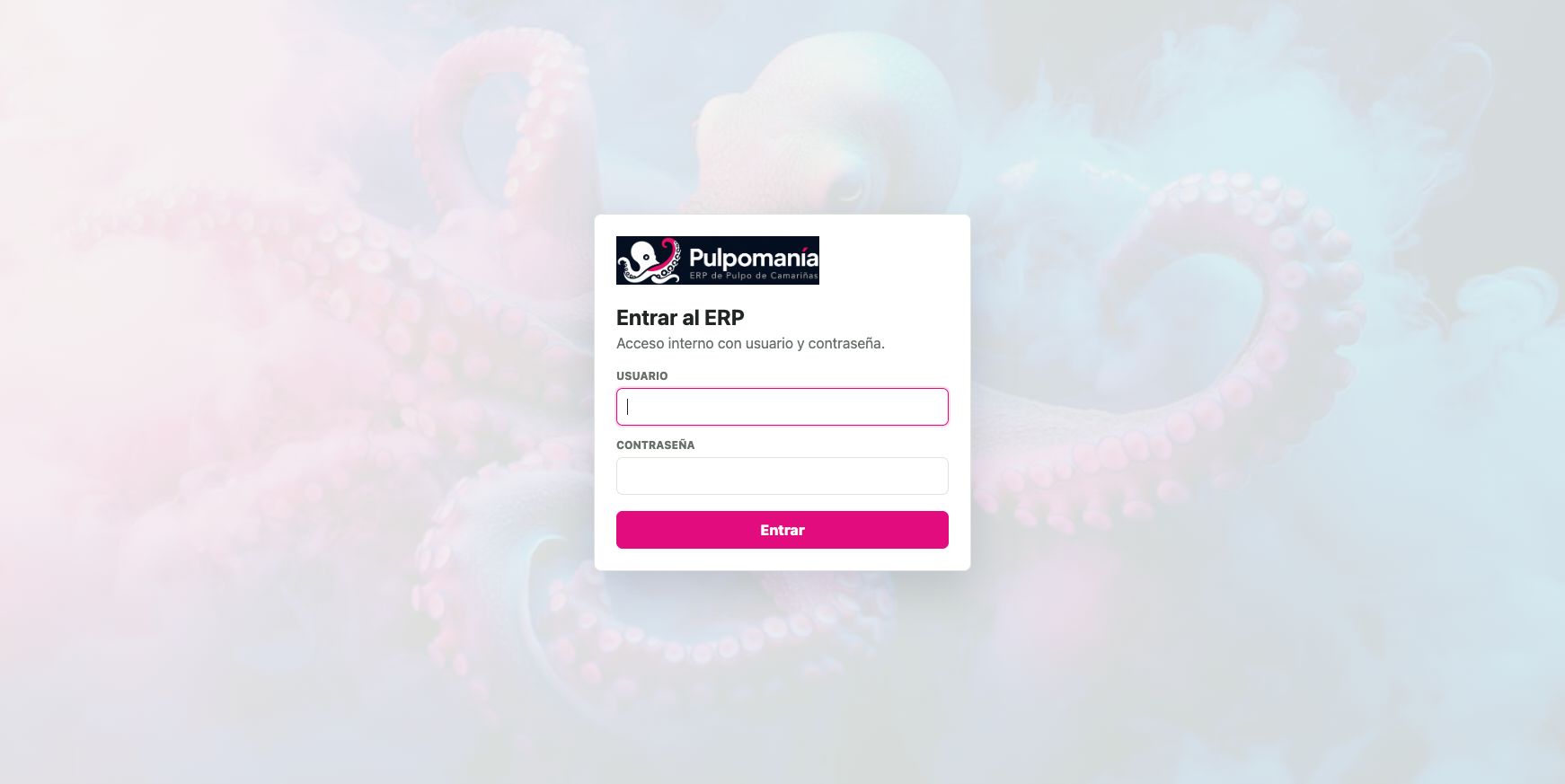
The web app makes it possible to review reports, consult dashboards, manage clients, prepare budgets, administer people, vehicles, products and costs, and keep a reliable history of every change.
Most common queries and tasks can start from WhatsApp: sending a report, checking information, making an estimate or coordinating. The system processes the request and returns the answer through the same channel.
The ERP connects with the calendar and coordination systems to share information between management, sales and teams, as well as supporting tasks such as posters and communications.
Before, reports were filed away without creating a shared view. Later, entering them in Google Forms took around four minutes per document: nearly an hour of work every weekend. Now it is enough to take a photo and send it through WhatsApp.
The time saving matters, but the most valuable change is something else: every report feeds a system that helps understand the economic reality of the company, anticipate decisions and coordinate people better.
Entering an unfamiliar operation, listening, asking questions and discovering where time and information are lost.
Turning conversations, exceptions and manual calculations into a flow the whole team can understand.
Choosing a solution proportional to the moment and evolving it from Google Sheets to Django, PostgreSQL and agents.
Building around people, integrating the system with tools as everyday as WhatsApp.
If your company depends on scattered sheets, messages or manual calculations, I can help you understand the problem and build a solution the team will actually use.